
| Capital at risk. All investments involve risk and investors may not get back the amount originally invested. |
With the Nikkei having now reached and exceeded its previous all-time high, investors are asking what is next for the Japanese market. What does the near- and long-term look like for Japanese equities, and can they sustain life at this elevated altitude?
Highlights:
|
Japanese financial markets reacted strongly to comments from Finance Minister Satsuki Katayama on 10 July, after she stated that the government intends to encourage households and pension funds, including the Government Pension Investment Fund (GPIF), to increase investment in Japanese financial assets. Although no specific measures were announced, the remarks sparked a broad-based market rally, with equities rising, government bond yields falling, and the yen strengthening against the US dollar.
The market response reflected expectations that greater domestic investment could support demand for Japanese assets. Following the comments, the domestic market saw a “triple rally” as the Nikkei Stock Average rose sharply, while yields on 10-year Japanese government bonds declined and the yen appreciated.
Source: Bloomberg and SMDAM
What will be the role of GPIF, the world’s largest
pension fund?
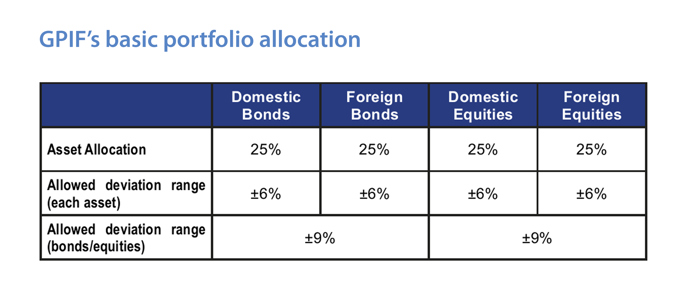
Under its current strategic asset allocation, GPIF maintains a broadly balanced portfolio, with 25% allocated to each of domestic equities, foreign equities, domestic bonds and foreign bonds.
In theory, the fund could increase its allocation to domestic assets by reducing overseas holdings and reinvesting the proceeds in Japanese stocks and bonds. Such a shift would likely involve repatriation of capital, creating demand for the yen while simultaneously supporting domestic asset prices. The market’s reaction therefore appears rational given these
potential implications.
However, a meaningful change in GPIF’s allocation is far from straightforward. The fund is required to manage assets exclusively for the benefit of pension beneficiaries and is prohibited from pursuing other policy objectives. In other words, portfolio adjustments cannot be made with the aim of supporting the currency or promoting broader economic policy goals. This fiduciary constraint makes the use of GPIF as a policy tool both challenging and politically sensitive.
Fiscal confidence is key to JGB demand
Minister Katayama’s comments also highlighted the government’s intention to expand the range of government bonds available to retail investors. This initiative comes as the Bank of Japan gradually reduces its purchases of long-term government bonds, increasing the importance of attracting alternative sources of stable demand.
Broadening the investor base to include households as well as domestic and international institutional investors will require clear communication on government bond issuance and a demonstration of commitment to fiscal consolidation.
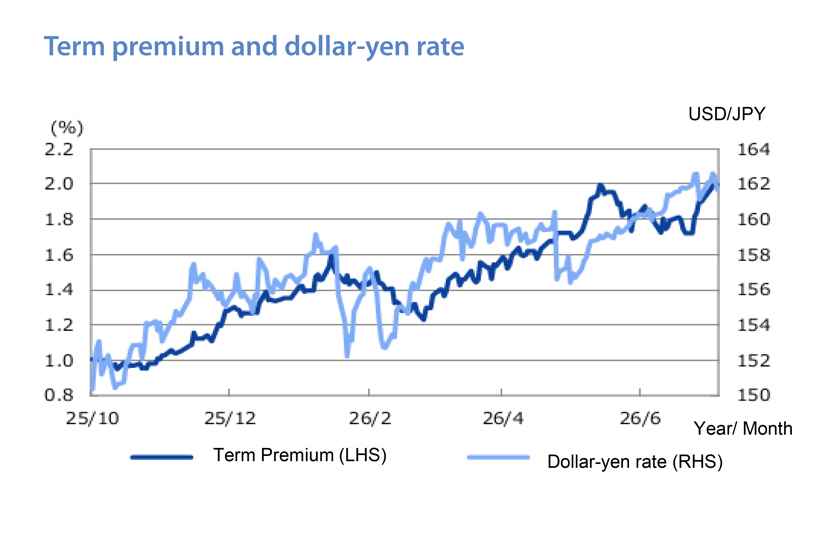
Nevertheless, expanding participation alone is unlikely to be sufficient. Recent market concerns have centred on perceived weakening of fiscal discipline, as well as policy discussions that some investors believe could undermine the Bank of Japan’s independence. These factors have contributed to rising term premiums and periods of yen weakness, underscoring the importance of maintaining confidence in the broader policy framework.
Ultimately, while measures designed to encourage greater domestic investment are likely to be welcomed by markets, the success of such initiatives will depend on more than institutional reforms. Sustained demand for Japanese government bonds will ultimately be underpinned by confidence in Japan’s fiscal management. As a result, market participants will be watching closely for further details on both the government’s investment initiatives and its broader fiscal strategy.
Invest with us
If you have any account or dealing enquiries, please contact BBH using the following contact details:
Brown Brothers Harriman (Luxembourg) S.C.A.
80, route d’Esch, L-1470 Luxembourg
T: +352 474 066 226
F: +352 474 066 401
E: Lux.BBH.Transfer.Agent@BBH.com

Richard HAXE
Managing Director, Head of Business Development

Alex BARRY
Executive Director, Head of Distribution - UK and Ireland

Chloé CHOQUIN
Director, Business Development & Client Relations

Thomas CARTWRIGHT
Director, Business Development & Client Relations
|
Disclaimer An investment’s value and the income deriving from it may fall, as well as rise, due to market and currency fluctuations. Investors may not get back the amount originally invested. The information on this website is not intended to be investment advice, tax, financial or any other type of advice, and is for general information purposes only without regard to any particular user's investment objectives or financial situation. The information is educational only and should not be construed as an offer, solicitation, or recommendation to buy, sell, or transact in any security including, but not limited to, shares in any fund, or pursue any particular investment strategy. Any forecasts, figures, opinions or investment techniques and strategies set out are for information purposes only, and are based on certain assumptions and current market conditions that are subject to change without prior notice. The views of Sumitomo Mitsui DS Asset Management (UK) Limited reflected may change without notice. In addition, Sumitomo Mitsui DS Asset Management (UK) Limited may issue information or other reports that are inconsistent with, and reach different conclusions from, the information presented in this report and is under no obligation to ensure that such other reports are brought to the attention of any recipient of this report. Decisions to invest in any fund are deemed to be made solely on the basis of the information contained in the prospectus and the PRIIPS KID accompanied by the latest available annual and semi-annual report. |

 United Kingdom
 Switzerland
 Luxembourg
 Germany
 Finland
 Ireland
 Netherlands
 Rest of EEA
 Middle East
 Japan 日本
 Hong Kong 香港
 Singapore 新加坡
 USA
USA
 Other
Other